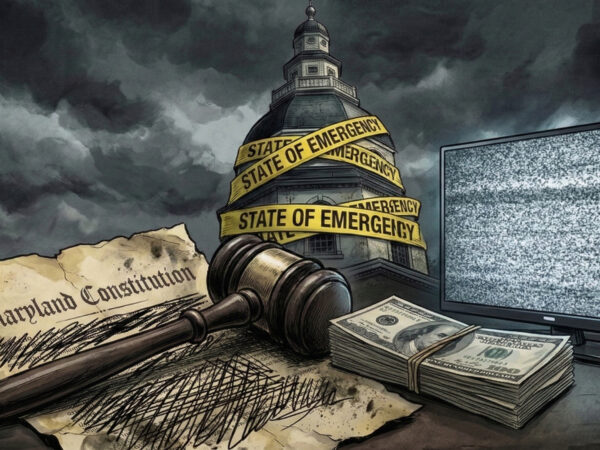
Annapolis Makes It Easy to Vote Them In, But Damn Near Impossible to Vote Their Laws Out
By Adam Reuter
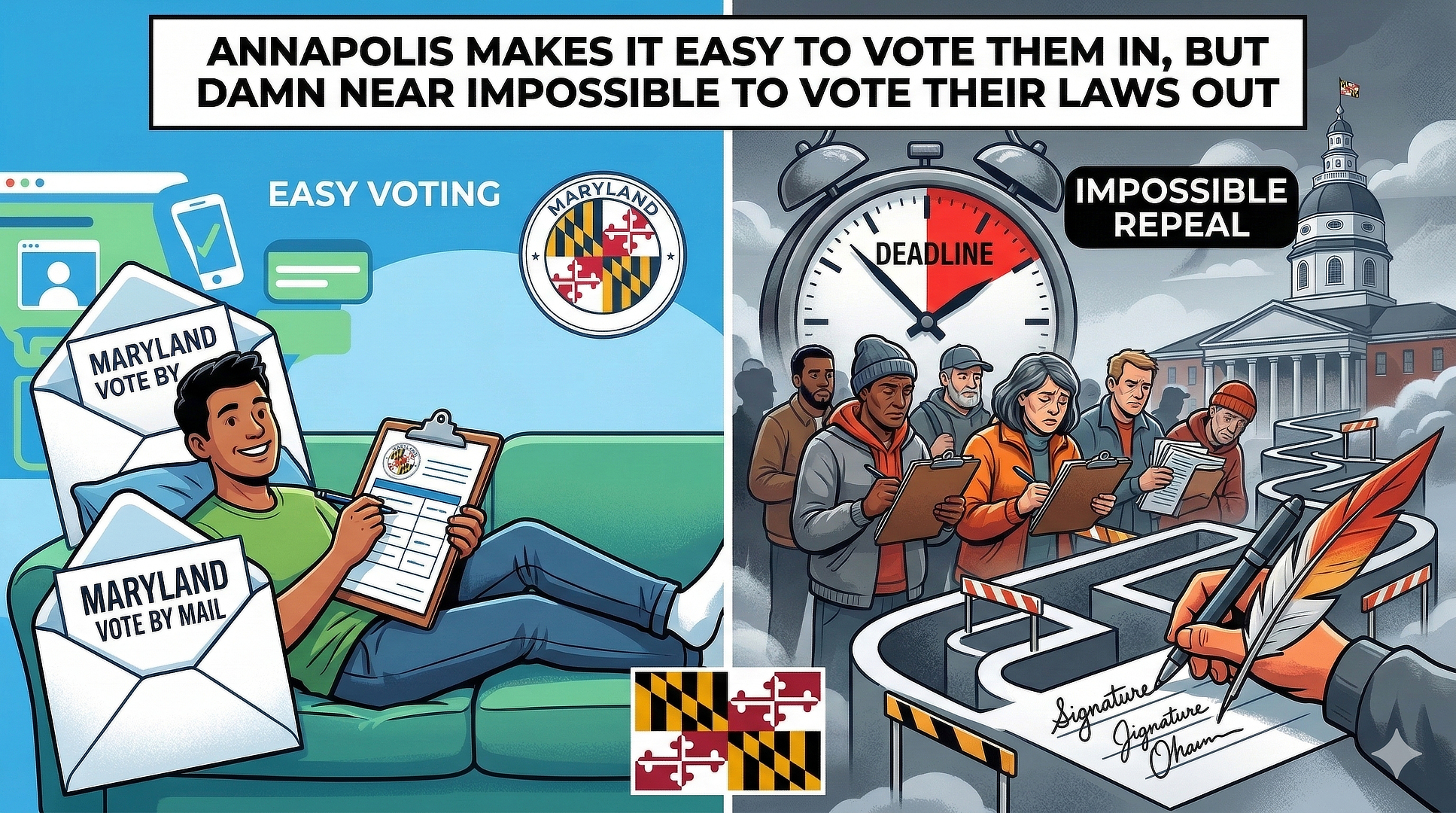
You can mail-in your ballot from your couch with zero witnesses, zero hassle, and zero questions asked. Fill out the ballot, drop it in the mail and presto, your voice in “democracy” has been heard. But try to repeal the trashy unconstitutional bills those same politicians just rammed through Annapolis?
Good luck.
You’ll need a team of circulators, wet-ink signatures collected in person like it’s 1787 and a sprint against a clock deliberately rigged against you. Welcome to Maryland’s veto referendum process — the so-called “people’s check” on the General Assembly. It’s right there in Article XVI of the Maryland Constitution, the one they love to brag about when they want to sound populist.
Here’s how it actually works: The legislature gets a leisurely 90-day session to concoct whatever ideas they can think of. They debate, amend, make backroom deals and finally pass it in the dead of night. Then every non-emergency bill automatically becomes law on June 1.
Your move? You have until May 31 — sometimes as little as 48 days if they drop it on the last day — to collect more than 20,000 valid signatures from registered voters just to keep the fight alive. Miss that by one minute and the law takes effect. Hit it? You get a measly few extra weeks to reach the full 60,157 signatures.
No internet signatures allowed. No apps. No Zoom. No “print it at home and mail it in.” Every single name must be handwritten in front of a live circulator who swears under penalty of perjury that they personally watched the person sign. One slip and the whole page is trash.
Compare that to how easy it is to put these people in office in the first place. Absentee ballots? No witness required. Early voting? Walk in, vote, leave. Same-day registration? Sure. The state has spent years stripping every possible friction out of the election process so turnout looks good and incumbent politicians stay comfortable. But when the people try to use the one tool the Founders actually gave us to repeal their mischief? Suddenly it’s 18th-century rules on steroids.
They’ll tell you this is to prevent fraud. Funny — the same people who fought tooth and nail to make mail-in voting permanent during COVID now claim that letting citizens mail in a petition page would somehow destroy democracy. The real reason is obvious: they want the power flowing one way.
Easy to elect them. Hard to fire them or stop their bad ideas. It’s not a bug in the system, i’s the feature. This isn’t how a free republic is supposed to work! The whole point of direct democracy tools like the veto referendum was to give We the People a fast, effective veto when Annapolis overreaches.
Instead, they turned it into an obstacle course designed to exhaust and discourage anyone who dares push back. While legislators sip coffee in committee rooms for four months plotting their next power grab, citizens are left scrambling with clipboards and gas money, praying the weather holds and enough volunteers show up at the gun show or church parking lot.
The hypocrisy is glaring. They made voting frictionless because it benefits them. They made repeal “friction-full” because it threatens them. And then they have the nerve to lecture us about “threats to democracy.”
Marylanders, this is your government telling you your consent only matters on Election Day. And even then, only in the most passive, low-effort way possible. If you want real accountability, you have to play by their stacked rules anyway. So be it. Form the committee. Download the official forms from elections.maryland.gov. Line up those circulators now.
Watch the live session calendar like a hawk. When the next rights-trampling bill slides through on April 13, hit the ground running. Because the message needs to be loud and clear: We see the game. We know the deck is stacked. And we’re still coming for every unconstitutional law you pass — even if you make us bleed for it! The ballot box is supposed to be the people’s check on government. Right now in Maryland, it’s more like a suggestion box with a 45-day expiration date and a “no digital submissions” sign taped to the front.
Time to change that–one wet-ink signature at a time.