Tim Fazenbaker, Baltimore County Council Candidate, Interview with the Baltimore Informer
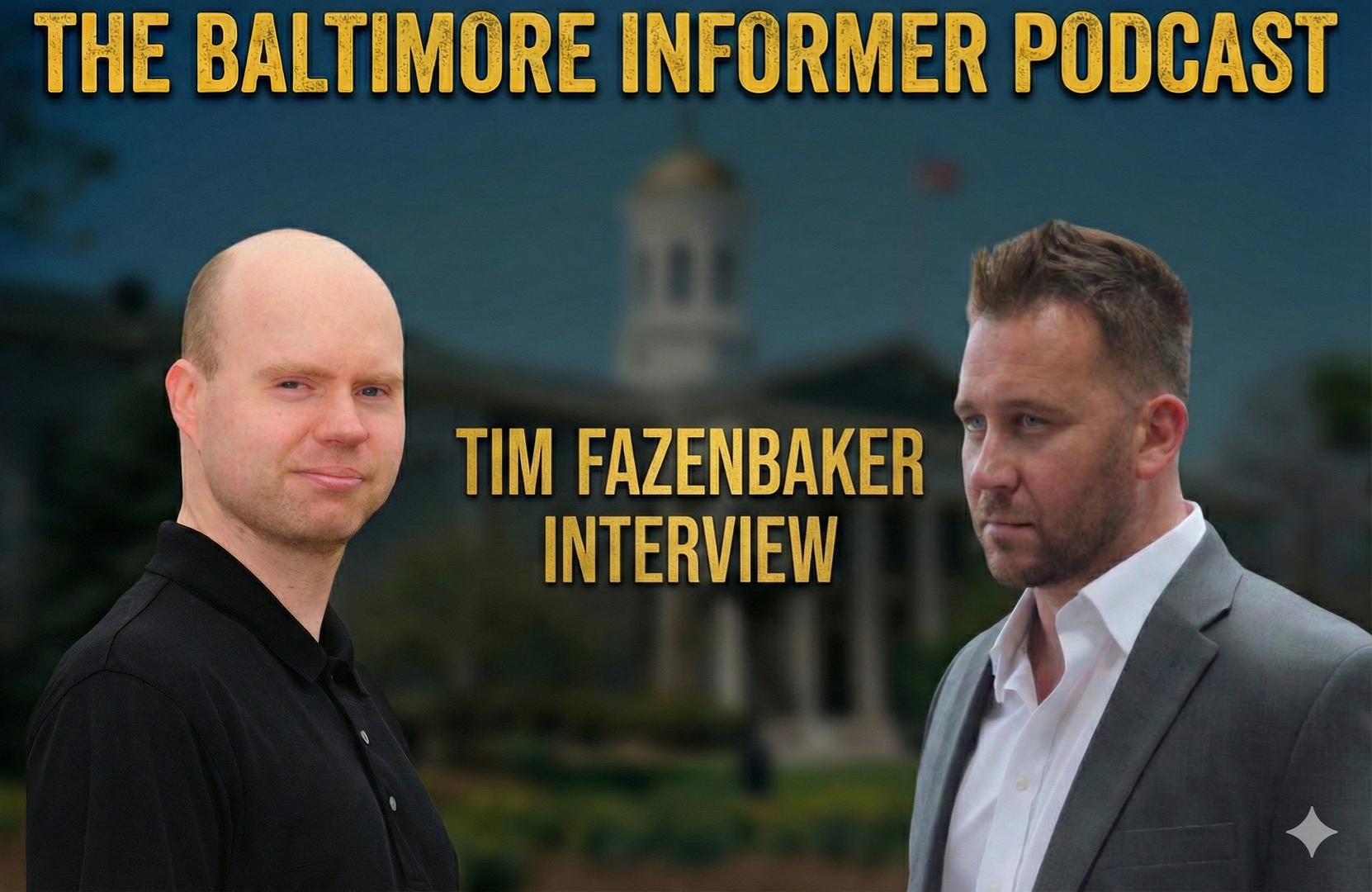
Historic Courthouse of Baltimore County photo by James G. Howes
By: Adam Reuter
In a crowded primary season often defined by slogans and endorsements, it is rare to hear a candidate discuss the specific mechanics of water main failures or the auditing of non-profit executive salaries.
In this exclusive sit-down interview with The Baltimore Informer, District 9 County Council candidate Tim Fazenbaker laid out a platform that moves beyond standard party lines. From his plan to attract AI infrastructure to Sparrows Point to his fierce defense of the Inspector General, Fazenbaker presented a vision of a district that stops servicing developers and starts servicing residents.
Podcast: Play in new window | Download
Here is a detailed summary of the key policy positions discussed in the episode.
1. The “Steel Point 2.0” Economic Vision
Fazenbaker, who grew up in Dundalk and Edgemere, argues that the district cannot survive on retail and warehousing alone. He proposes a modern industrial strategy focused on Artificial Intelligence infrastructure.
- The Concept: Attract high-tech data and AI processing centers to the industrial land at Sparrows Point.
- The “Blue Collar” Link: Fazenbaker emphasizes that high-tech infrastructure requires an army of skilled tradespeople—HVAC, electrical, and construction—to build and maintain it.
- The Goal: create a “pipeline” of affluent, trade-based jobs that mirror the economic stability the Steel Plant once provided, rather than settling for low-wage logistics jobs.
2. Infrastructure: The “Sinkhole” Metaphor
The conversation highlighted the literal crumbling of District 9’s infrastructure, specifically citing the constant water leaks at the intersection of North Point Boulevard and Wise Avenue. Fazenbaker connected these failures directly to overdevelopment.
- The Problem: The county continues to approve thousands of new housing units without upgrading the sewer and water systems to handle the load.
- The Developer Loophole: Fazenbaker called out the practice of granting “waivers” for developer impact fees. “The burden of the infrastructure costs keeps falling onto the taxpayer,” he noted. “If you build a new development, you should pay for the schools, the roads, the sewers.”
- The Key Bridge Impact: He acknowledged that the collapse of the Key Bridge has diverted massive traffic through local roads, accelerating their deterioration and requiring immediate federal and state intervention.
3. Public Safety & Juvenile Justice
Fazenbaker took a hard line on the current state of juvenile justice in Baltimore County, referencing a specific case in Middle River involving a 12-year-old victim.
- The Critique: He criticized the current catch-and-release policies for violent juvenile offenders, stating that the “lack of consequences” is effectively erasing the deterrent for crime.
- The Solution: Rather than simply jailing minors or releasing them, he supports the creation of secure mental health and addiction facilities where troubled youth can be rehabilitated off the streets, rather than being returned to the community to offend again.
“If you have nothing to hide, why are you afraid of an auditor?”
4. Government Accountability: Protecting the Inspector General
Perhaps the strongest contrast drawn in the interview was Fazenbaker’s unreserved support for Inspector General Kelly Madigan. While other political figures have attempted to cut funding or limit the scope of the IG’s office, Fazenbaker views the auditor as the taxpayer’s best friend.
- Transparency First: “If you have nothing to hide, why are you afraid of an auditor?” Fazenbaker asked.
- Open Books: He proposed a radical transparency measure where county expenditures and contracts are posted online by default, allowing citizens to act as “armchair auditors.”
5. The “Non-Profit Industrial Complex”
Fazenbaker raised concerns about the flow of county grant money to Non-Governmental Organizations (NGOs) and non-profits in the district.
- The Grift: He pointed out that some non-profit executives are paying themselves salaries in the quarter-million-dollar range while utilizing taxpayer grants.
- The Fix: He called for a forensic audit of these organizations to ensure that county funds are actually reaching the people in need, rather than lining the pockets of the politically connected class.
6. Rosedale and “The Forgotten Middle”
Acknowledging that the new District 9 map combines Dundalk, Edgemere, and Rosedale, Fazenbaker addressed the feeling of isolation often felt by Rosedale residents. He committed to being physically present at community meetings in all three sectors, ensuring that resources for roads and public safety are not hoarded in one part of the district at the expense of another.
The Bottom Line
Throughout the interview, Fazenbaker returned to a central theme: Servitude over Status.
“I am not looking for a paycheck,” Fazenbaker told The Informer. “I don’t care about being ‘Man of the Year.’ I want to be ‘Servant of the Year.'”