Sharonda Huffman, Baltimore County Council Candidate, Interview with the Baltimore Informer
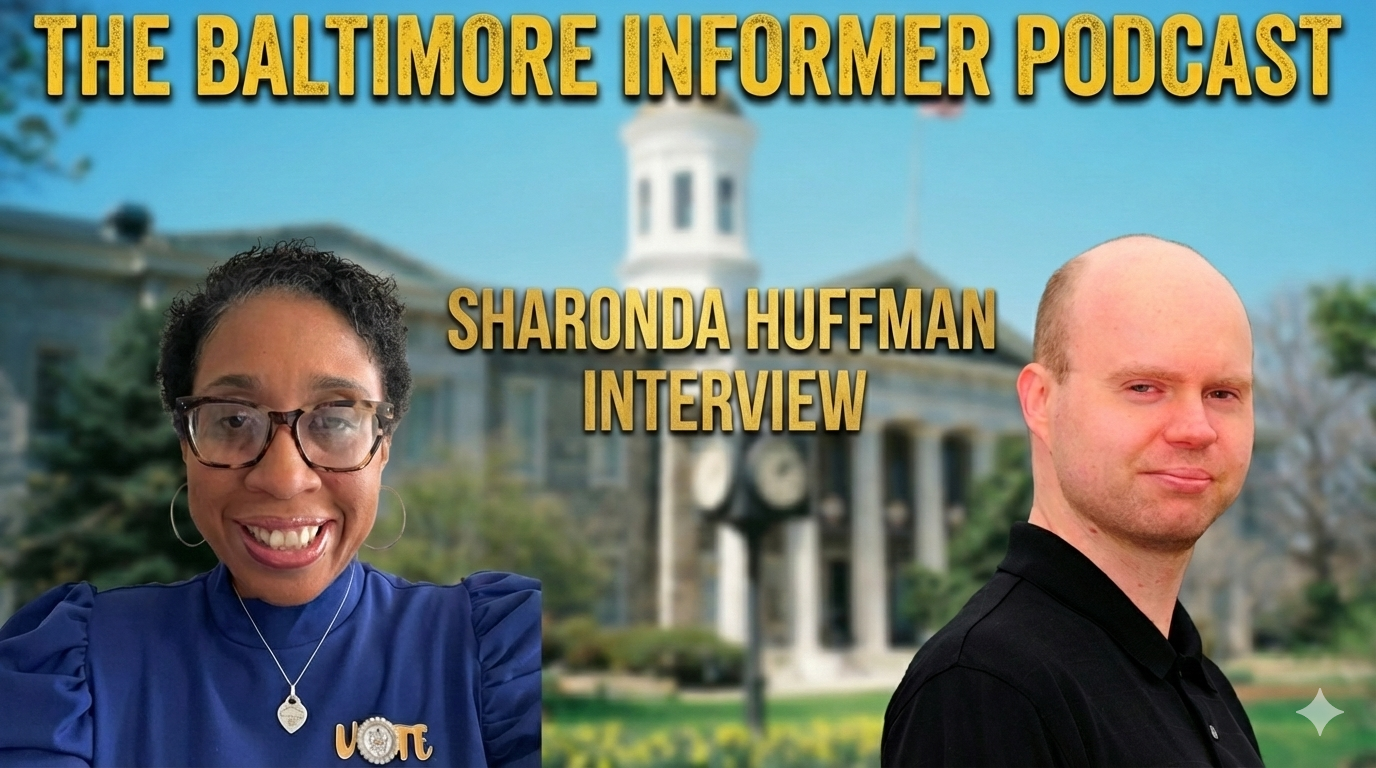
Historic Courthouse of Baltimore County photo by James G. Howes
EDITOR’S NOTE: This interview was conducted in July 2025. Due to the finalization of the Baltimore County redistricting map, Sharonda Huffman is running to represent Councilmanic District 8, not District 7 as mentioned in the audio recording.
By: Adam Reuter
Podcast: Play in new window | Download
In a political landscape often dominated by career politicians and soundbites, Sharonda Huffman brings a resume built in the trenches of social service and housing advocacy. A 20-plus year resident of Essex, Huffman sat down with The Baltimore Informer to discuss her campaign, her background as a housing director and why she believes Baltimore County’s government is stuck in the past.
Huffman, who holds degrees from Morgan State and Strayer University, is not running simply to fill a seat. She is running to bring a “root cause” approach to the County Council.
“I just don’t want to be the community leader that knows how to pick up your trash,” Huffman told The Informer. “I want to be the person to resolve why didn’t they get your trash.”
Here are the key takeaways from our exclusive sit-down.
1. The Housing Crisis: “It’s Just Shelter”
As a former housing director for Maryland Inclusive Housing and the current Housing Committee Chair for the Baltimore County NAACP, Huffman’s command of the affordability crisis is sharp. She pushed back against the “NIMBY” (Not In My Back Yard) mentality that often stalls development in the county.
Huffman argues that the county’s refusal to innovate on housing stock is hurting the economy. Her philosophy challenges the modern view of real estate solely as a financial vehicle.
- The Philosophy: “We have traditionally thought that the only way you were going to build wealth is through your home. Sometimes, it is just shelter.”
- The Reality Check: She highlighted the disconnect between wages and rent, noting that young people—and even seniors looking to downsize—are being priced out of their own communities because of a lack of diverse housing options like apartments and townhomes.
2. Workforce Development: Beyond the Degree
Huffman’s background in “Welfare to Work” programs informs her economic policy. She argued that the county needs to do a better job connecting local businesses with the local labor force, particularly students who aren’t college-bound.
- The Chamber Strategy: She proposed a more aggressive partnership with local Chambers of Commerce to create internships and job pipelines for high school graduates, rather than leaving them to navigate the market alone.
- The “Paper Ceiling”: She criticized the over-reliance on college degrees for jobs that require skills, not diplomas, advocating for a shift toward certification-based hiring to get more county residents working.
3. Public Safety & Mental Health
One of the most personal moments of the interview came when Huffman discussed her son, an adult with autism. She stressed that public safety isn’t just about policing; it’s about training. She recounted instances where police officers, while well-intentioned, often lack the specific training to recognize cognitive disabilities during a stop.
- 988 vs. 911: “We teach our children 911. We also need to teach our children 988,” Huffman said, referring to the suicide and crisis lifeline. She advocates for a response system where social workers and mental health professionals are deployed for non-violent crises, freeing up police to handle actual crime.
4. Modernizing a “Back Room” Government
Huffman didn’t mince words about the state of Baltimore County’s internal operations. She described the county’s systems—from zoning to permitting—as antiquated and slow, hindering small business growth.
- Transparency: She called out the culture of “backroom deals” in Towson, promising to bring a level of transparency that allows residents to see how decisions are made before the ink is dry.
- Efficiency: She noted that the county’s sluggish bureaucracy is a choice, not a necessity. “We need to modernize our zoning and permitting… we are way behind schedule.”
The Bottom Line
Sharonda Huffman is positioning herself as the candidate of competence over connections. Whether discussing the complexities of Section 8 vouchers or the need for better sidewalks for the disabled, she speaks with the detail of someone who has done the work.
In a race that will determine the future of the Eastside, Huffman is betting that voters want a representative who understands the policy, not just the politics.
Listen to the full interview above.
For more information on Sharonda Huffman’s platform, visit SharondaHuffman.com.