Oversight Report: December 1, 2025 Baltimore County Council Legislative Session
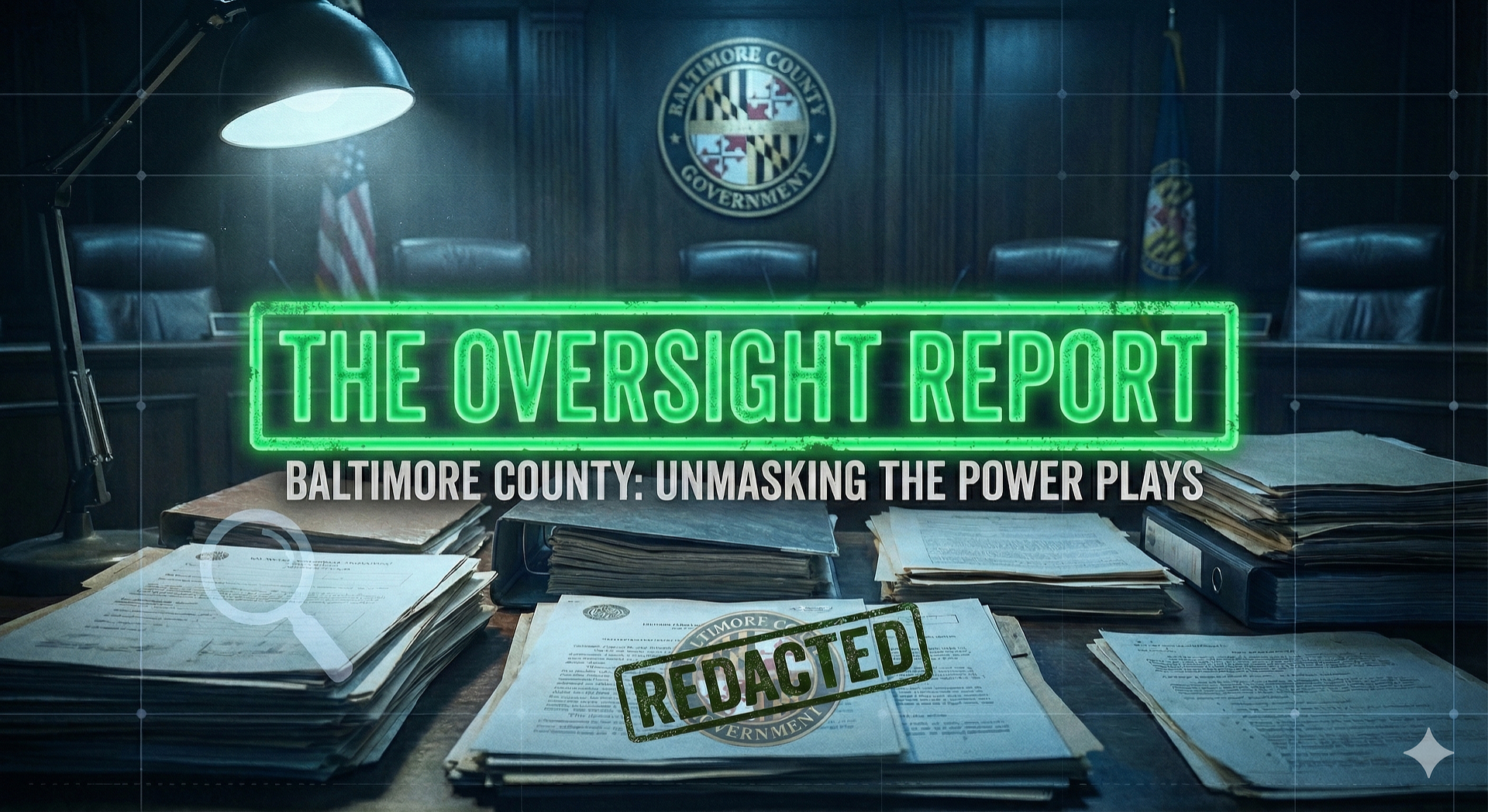
The Baltimore County Council unanimously passed zoning changes benefiting a specific business district and approved uncapped snow removal contracts during a brief legislative session Monday night.
The December 1 meeting saw the final passage of several controversial measures, with no debate from council members.
Zoning Rules Rewritten for Reisterstown Business
The Council voted 7-0 to approve Bill 81-25, a zoning change sponsored by Councilman Julian Jones (District 4). The bill modifies county law to allow “Animal Boarding Place Class B” facilities in the Business Major (B.M.) zone.
Prior to the vote, Councilman Jones introduced an amendment that significantly narrowed the bill’s scope. The new language restricts this permission specifically to properties within the “Reisterstown Commercial Revitalization District” (43:40 in the video).
Critics of such measures often refer to this as “spot zoning”—the practice of changing the law to benefit a specific property owner or business rather than implementing a countywide planning strategy. Jones previously admitted in the November 25 work session that the bill was drafted to assist a single constituent who wished to open a dog boarding business (November 25, 2025 Work Session video, 25:26)
“Blank Check” Snow Contracts Approved
The Council also gave unanimous approval to Fiscal Matter 4, awarding three new contracts for snow removal and deicing services (46:58 in the video)
During the previous week’s work session, Department of Public Works officials confirmed that these contracts do not have a specific spending cap. Instead, vendors are paid from the county’s general “storm emergency budget,” allowing for unlimited billing as long as emergency funds remain available. The contracts were approved without any discussion on the voting floor.
Surprise Tax Exemption Bill Introduced
In a last-minute move, Chairman Michael Ertel amended the agenda to introduce Bill 93-25, a piece of legislation that had not been circulated to the public seven days prior as is standard procedure (36:15 in the video).
The bill proposes exempting certain “affordable housing developments” from paying county development impact fees. Chairman Ertel specifically noted the bill was related to the “Ridgedale PUD” in Rosedale (see video, 36:50).
Impact fees are one-time charges imposed on developers to help pay for the new roads, schools, and infrastructure required by their projects. By waiving these fees, the county effectively subsidizes the development by shifting those infrastructure costs onto existing taxpayers.
Law Ignored on School Overcrowding?
During public comments, resident Mary Taylor accused the Council of failing to follow its own laws regarding school overcrowding.
Taylor testified that Bill 31-24, passed in August 2024, legally mandated the creation of a “Committee on Public School Capacity” to review development in overcrowded districts. According to Taylor, 15 months have passed, and the committee has never met, nor has a meeting schedule been published (see 1 hr, 20 seconds in the video).
“This delay isn’t just broken law, it’s broken trust,” Taylor told the Council.
Councilman David Marks (District 5) responded that he had named his appointees to the committee but acknowledged that the body would not “fix the problem overnight” (see video, 1:04:05)
Donate to the Baltimore Informer